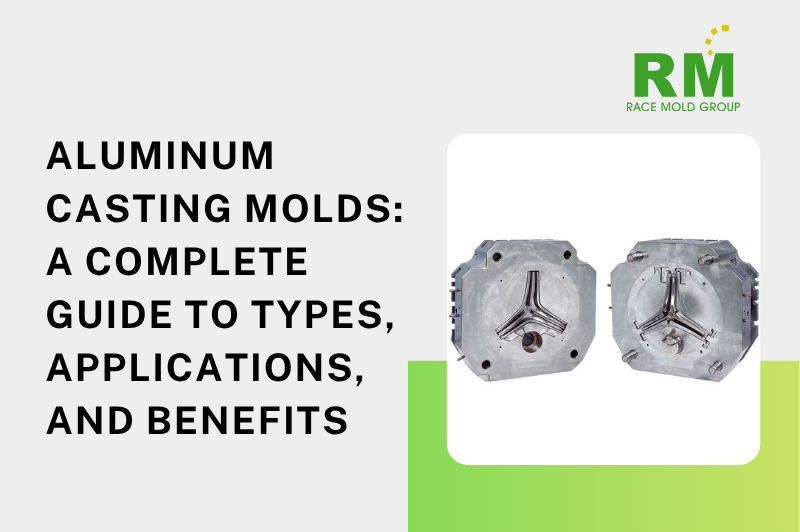
In the world of metal component manufacturing, aluminum casting molds play a pivotal role in shaping precision parts for a wide variety of industries—from automotive and aerospace to electronics and consumer products. Their ability to produce lightweight, durable, and complex shapes makes them essential to modern production lines seeking efficiency and consistency.
This article will walk you through what aluminum casting molds are, the different types available, their core applications, and the key benefits of using aluminum in casting.
What Are Aluminum Casting Molds?
Aluminum casting molds are tools used to form molten aluminum into specific shapes during the casting process. The mold defines the external and internal features of a part and must be engineered to withstand high temperatures and repeat usage. These molds are commonly made from tool steel or other heat-resistant materials and come in various configurations depending on the casting method used.
Types of Aluminum Casting Molds
There are several common mold types used in aluminum casting:
- Die Casting Molds
These molds are used in high-pressure die casting machines. They allow for fast-cycle production of parts with excellent dimensional accuracy and smooth surface finishes.
- Permanent Mold Casting (Gravity Die Casting)
These metal molds are reused for multiple cycles and use gravity to fill the cavity with molten aluminum, suitable for medium-volume production.
- Sand Casting Molds
Although not reusable like metal molds, sand molds are highly flexible and ideal for large, intricate parts or low-volume runs.
- Investment Casting Molds
Also known as lost-wax casting, these molds are used for highly detailed parts and complex geometries, often in aerospace and medical applications.
Applications of Aluminum Casting Molds
Aluminum casting molds are widely used across various industries due to the metal’s lightweight, strength-to-weight ratio, and corrosion resistance. Common applications include:
- Automotive Components: Engine blocks, housings, wheels, and suspension parts
- Aerospace: Lightweight structural parts, brackets, and casings
- Electronics: Heat sinks, enclosures, and frames
- Consumer Goods: Furniture hardware, appliance components, and lighting fixtures
- Industrial Equipment: Pumps, valves, and precision housings
Benefits of Aluminum Casting
Using aluminum casting molds offers several manufacturing advantages:
- Lightweight yet strong: Ideal for transportation and aerospace industries where weight reduction is critical
- Corrosion resistance: Natural oxide layer provides protection, especially in harsh environments
- Excellent thermal conductivity: Suitable for parts requiring heat dissipation
- Dimensional accuracy: Die casting molds can achieve tight tolerances and repeatable results
- High production efficiency: Fast cycle times in high-pressure die casting reduce lead times
Choosing the Right Aluminum Casting Mold
The best mold type for your application depends on several factors:
- Volume of production: Die casting suits high-volume runs, while sand casting is ideal for prototypes or custom work
- Part complexity: Investment casting or die casting is preferred for intricate features
- Surface finish requirements: Die casting offers smoother finishes than sand casting
- Budget and tooling cost: Sand casting has lower mold cost, but higher per-part cost over time
RACE MOLD: Comprehensive Mold Solutions Beyond Injection & Casting
At RACE MOLD, we offer a full range of mold solutions, including plastic injection molds, die casting molds (including aluminum casting molds), and metal stamping dies. Our approach is collaborative and focused on delivering the right solution for your project—whether it involves high-volume die casting, low-volume sand casting, or complex tooling needs.
With capabilities that include:
- Support for molds up to 25 tons and high-tonnage presses (up to 2,700 T for die casting)
- Advanced process options like insert molding, overmolding, gas-assisted, and hot runner systems for plastics
- Standard compliance with DME, Hasco, and customized requirements across different mold types (die casting, injection, stamping)
RACE MOLD combines technical expertise, flexible solutions, and global experience to help you choose—and execute—the optimal aluminum casting mold process for your product. Whether you're developing a new product line or upgrading your manufacturing capabilities, we’re here to support your success.
FAQ: Aluminum Casting Molds
- What is the lifespan of an aluminum casting mold?
The lifespan depends on the type of mold and the casting process. High-pressure die casting molds can typically last for tens of thousands of shots, while sand casting molds are single-use. With proper maintenance, permanent metal molds can reach up to 100,000 cycles or more.
- Can aluminum casting molds be reused?
Yes, metal molds like those used in die casting and permanent mold casting are reusable. In contrast, sand and investment casting molds are generally not reusable after each casting cycle.
- What factors affect the cost of aluminum casting molds?
Key factors include the complexity of the part, the mold material, the casting process (die, sand, investment), required surface finish, and production volume. Die casting molds have higher upfront costs but lower per-part costs in high-volume runs.
- What’s the difference between aluminum casting and aluminum injection molding?
Aluminum casting involves pouring molten aluminum into a mold, while injection molding uses plastic materials injected into a mold under pressure. Aluminum is not used in injection molding due to its high melting point—it is primarily for metal casting.
- How can I ensure the quality of parts produced with aluminum casting molds?
Choose a mold manufacturer with precision machining, mold flow analysis, and comprehensive quality control like dimensional inspection and function testing. Consistent maintenance and material selection also affect part quality.