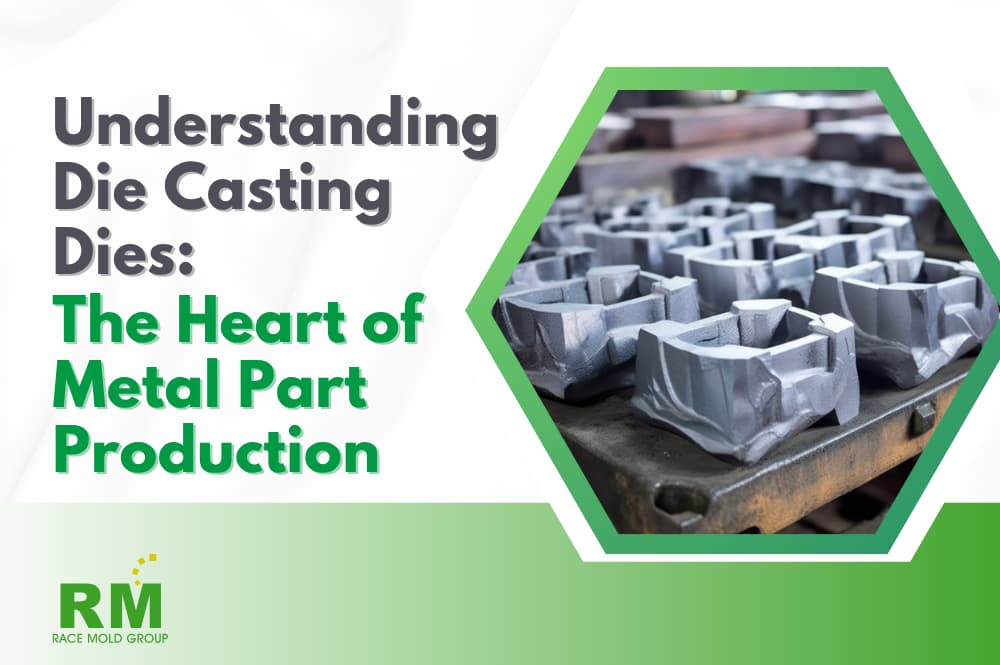
In the world of manufacturing, die casting is a highly efficient process used to produce high-volume, precisely shaped metal parts. At the core of this process lies the die casting die – a sophisticated and robust tool that fundamentally dictates the quality, accuracy, and efficiency of the final product. Understanding these specialized molds is crucial for anyone involved in metal fabrication, engineering, or product design.
Simply put, a die casting die is a reusable metal mold designed to shape molten metal under high pressure. Imagine it as a highly engineered, two-part cavity that, when closed, perfectly replicates the desired metal component. Molten metal (typically aluminum, zinc, or magnesium alloys) is injected into this cavity at tremendous speed and pressure, then rapidly cools and solidifies to form the intricate part.
Key Components of a Die Casting Die
A typical die casting die is composed of several critical sections, each playing a vital role in the casting process:
-
Fixed Die Half (Cover Die / Stationary Die Half): This half of the die remains stationary and is mounted to the fixed platen of the die casting machine. In hot-chamber machines, it typically contains the sprue – the entry point for the molten metal. In cold-chamber machines, it connects to the injection system.
-
Movable Die Half (Ejector Die Half): This half moves along the machine's platen, allowing the die to open and close. It houses the ejection system, which pushes the solidified casting out of the mold once the process is complete.
When these two halves are clamped together, they form the precise mold cavity that defines the shape and dimensions of the finished part.
Essential Internal Elements of a Die Casting Die
Beyond the main halves, numerous intricate components work in unison to ensure a successful casting:
-
Cavity and Core: These are the primary shaping elements. The cavity forms the external features of the part, while cores create internal features, holes, or complex geometries.
-
Gating System: This network of channels guides the molten metal from the machine's injection system into the mold cavity. It includes:
-
Sprue: The primary entry point for the molten metal.
-
Runners: Channels that distribute the metal from the sprue to the gates.
-
Gates: Narrow openings where the metal enters the actual mold cavity, controlling flow and solidification.
-
Ejector Pins: These precisely positioned pins push the solidified casting cleanly out of the mold after the die opens, preventing damage to the part or the die.
-
Guide Pins and Bushings: These ensure perfect alignment between the fixed and movable die halves when they close, guaranteeing dimensional accuracy of the casting.
-
Cooling Channels: Integrated pathways within the die circulate cooling fluids (like water or oil) to maintain optimal die temperature. This uniform cooling is crucial for controlling solidification rates, preventing part distortion, and ensuring consistent part quality and rapid cycle times.
-
Slide Cores and Lifters: For parts with undercuts, internal features, or side holes that cannot be directly molded by the main cavity, these movable components retract or shift to allow the part to be ejected.
-
Vent Systems (Vents): Small, strategically placed channels allow air and gases trapped within the mold cavity to escape during metal injection. This prevents porosity and ensures a solid, defect-free casting.
Materials and Manufacturing of Die Casting Dies
The demands placed on die casting dies are extreme. They must withstand immense pressure (up to thousands of PSI), high temperatures (molten metal can be over 700°C), and rapid thermal cycling. Therefore, these dies are typically manufactured from high-strength, heat-resistant tool steels, such as H13 steel, known for their durability and thermal fatigue resistance.
The manufacturing process for die casting dies is highly precise, involving advanced techniques like:
-
CNC Machining (Computer Numerical Control): For accurate shaping of the die components.
-
EDM (Electrical Discharge Machining): Used for creating intricate details and complex internal geometries that are difficult to achieve with conventional machining.
-
Grinding and Polishing: To achieve the required surface finish and dimensional accuracy.
The Importance of Die Casting Die Design
The design of a die casting die is a highly specialized engineering discipline. A well-designed die not only produces high-quality parts but also minimizes cycle times, reduces material waste, and extends die life. Considerations include:
-
Part Geometry: The complexity of the part directly influences the die's design.
-
Material Flow Analysis (Simulation): Advanced software is used to simulate how molten metal will fill the die, identifying potential issues like air traps or cold shuts before manufacturing the die.
-
Thermal Management: Efficient cooling channel design is critical for uniform cooling and preventing hot spots.
-
Ejection Strategy: Ensuring the part can be easily and safely ejected without damage.
-
Maintenance and Longevity: Designing for ease of maintenance and repair helps extend the die's operational life.
The Role of Die Casting Dies in Modern Manufacturing
From automotive components and electronic enclosures to consumer goods and medical devices, die casting dies are indispensable tools that enable the mass production of complex, high-precision metal parts at competitive costs. Their robust construction and intricate design are a testament to advanced engineering, making them the silent workhorses behind countless products we use every day.
Looking to Optimize Your Die Casting Process?
Understanding the intricacies of die casting dies is the first step. Whether you're designing a new product, sourcing manufacturing partners, or aiming to improve existing production, focusing on the quality and design of your die casting dies will yield significant returns in part quality, efficiency, and cost-effectiveness.
Let me know if you'd like any specific sections expanded or if you have other keywords you'd like to incorporate!